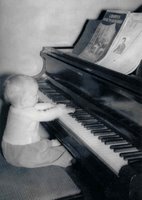
You’d think having the summer “off” means taking it easy but when Stuart Malina gives friends the “What I Did During My Summer Break” report, it can be pretty exhausting.
After conducting five outdoor concerts across the greater 4th of July Weekend with the Harrisburg Symphony – you can read more about them in earlier posts here and here – “taking a break” means conducting a concert with the Shippensburg Festival Orchestra Thursday evening, then being a pianist for two out of three programs for Market Square Concerts Summer Music series the following week!
This is the sort of thing many communities don’t get to experience. Most orchestras across the country have conductors who don’t live where the orchestra is based: these maestros may be very committed and dedicated to their orchestras and to the community’s cultural scene, but there are side benefits made possible when the conductor lives there and is personally involved in what else goes on in the area.
As he approaches his 10th anniversary with the Harrisburg Symphony, Stuart will be conducting the second of this summer’s Shippensburg Festival Orchestra concerts, their 40th Anniversary Season, this Thursday at 8pm. The program is tried-and-true with the Overture to “Der Freischütz” by Carl Maria von Weber, the Violin Concerto No. 1 in G Minor by Max Bruch and Tchaikovsky’s Symphony No. 5 in E Minor.
Oh, and by the way, did I mention the soloist for the Bruch concerto? Joshua Bell, one of the great violinists on the stage today – on any stage anywhere!
Bell had recently been in Central Pennsylvania to help the York Symphony celebrate their 75th Anniversary Season a little over a year ago when he played the Mendelssohn Concerto with Robert Hart Baker conducting the orchestra. So we’re very lucky to have him back in the area so soon.
Friends who’ve heard Bell’s performances – most recently playing the Bruch at Tanglewood – always comment on what a genuine guy he is after the performance, meeting the audience, autographing CDs, just like a rock star greeting young fans. He’s the kind of player that inspires young would-be musicians and music-lovers not just by his artistry (which is amazing) but also by his being so down-to-earth about it (a trait that is perhaps even more rare than great talent). While many of us may still think of him as the eternally young teen idol from the beginning of his career not that many years ago, he has the distinction of already being dubbed “A Living Legend,” something usually given to artists twice his age (or four times his seeming age).
*** ***** ******** ***** ***
So now it’s time to take a break, right?
Not quite. The next week, Stuart once again takes to the piano bench to play chamber music with the Fry Street String Quartet as part of Market Square Concerts’ Summer Music 2009.
I’ll cover those concerts over at the Market Square Concerts Blog where you can read more about some of the repertoire – including the Shostakovich Piano Quintet which they’ll play Wednesday, July 22nd, at 6:00 at Market Square Church. In a few more days, I’ll post something about Schubert’s “Trout” Quintet that concludes the series Sunday afternoon at the Glen Allen Mill along the Yellow Breeches.
After that, Stuart tells me there's actually going to be some vacation time with the family - and then in August, getting ready for the Symphony's new season that begins with Dvořák's New World Symphony and the Four Seasons - not Vivaldi's set of violin concertos, but Astor Piazzolla's view from Buenos Aires, with violinist Alexander Kerr returning to the Forum to open the Masterworks Series October 3rd & 4th. But more of that later.
Meanwhile, enjoy your summer - and don't forget, Art doesn't take a vacation: you can enjoy it year 'round!
- Dr. Dick
Tuesday, July 14, 2009

Monday, July 13, 2009
Support for Supporting the Arts in Pennsylvania
 If you've ever enjoyed a performance by any of the local arts groups as an audience member; if you have ever had an emotional response to a painting or to a theatrical production; if you have ever felt an epiphany from an experience with something artistic, whether it changed your life or just improved your day; if you have seen the expression on a child's face coming face to face with something artistic that cannot be explained in a government report, you know the importance of art in our every-day lives.
Tuesday morning at 11:00, there will be a rally in the Main Rotunda of the Pennsylvania State Capitol in support of supporting the arts in Pennsylvania.
Organized by Citizens for the Arts, you can read more about it on their web-site and find additional information at Dr. Dick's other blog, Thoughts on a Train.
Thanks!
- Dr. Dick
Saturday, July 4, 2009
Swingin' in the Rain: Negley Park, July 2nd
 If you haven’t noticed June also rhymes with Monsoon or how those Old Testament Weather Patterns everybody’s been complaining about this Spring have now lingered into July, it’s possible a little rain isn’t going to dampen an outdoor concert for you.
Fortunately the weather was greatly improved for Friday night’s performance at downtown Harrisburg’s American Music Festival – you can catch a slide-show of Rebecca Barnett’s photos at the Patriot-News’ website, PennLive.com.
That was not the case the night before with the 2nd annual 4th of July Concert in Lemoyne’s Negley Park.
When I was the orchestra manager for the symphony back in the ‘80s and our “Barge Concerts” were held around the 3rd week of June, playing from a barge IN the river – see a great photo here – Barker Howland, then music critic for the Patriot-News, never failed to mention the role of Jupiter Pluvius if there was even the threat of showers. I don’t recall any of the concerts I was involved in getting completely rained out – a half-hour wind delay, once; another time it was cut short just as a sudden shower came up - but my heart went out to Sue Klick, the current orchestra manager, contending with her first summer outdoor concert.
So in memory of Barker, I should begin by saying Thursday night, Jupiter Pluvius had a field day! And it was a very soggy field by the time he was done with it...
The forecast had been “iffy” at best - 10-20% chance of scattered showers and possible thunderstorms before 11pm. The weathermen on TV were saying Thursday afternoon could be a repeat of the stormy days we’d had on Tuesday and Wednesday. I don’t recall what the official Harrisburg total was, but the rain-bucket on my front porch had about 2" of rain in it on Thursday morning.
Pleasantly, the weather turned beautiful for the afternoon. My friend N and I left to head over to Negley Park around 6:15, after checking the weather radar to see a blob of showers over Chambersburg around 5pm ominously headed straight for Harrisburg. Of course, these systems can “peter out” long before they get to the Susquehanna Valley so we put our portable canvas chairs in his car and with one umbrella between us, arrived at Negley Park around 6:30.
By then, however, it had clouded up suspiciously. The Consagra Jazz Combo was playing away under their small canopy to the left of the main-stage tent for the orchestra. Good idea to get a tent – last year’s concert didn’t make it past half-time when showers curtailed the program at intermission. Whatever audiences will put up with, musicians don’t like having their instruments rained on – summer humidity is bad enough – and it’s rough reading the music when it’s soaking wet.
The chairs and stands were all in place, the music was on the stands, the stand lights were lit, the mics for the sound system - everything was all in place. Except for the musicians.
And in a few minutes it began to drizzle.
We huddled in our unfolded chairs and tried to share the umbrella. The drizzle turned into a steady rain, a nice cool fresh-smelling spring rain. The sky to the west looked grimly gray but there was a clearing area behind it, so we figured it’ll be fine by the time the concert starts.
 By 7:15, that clear area had long turned as gray and grim as the rest of the sky. The rain was now a steady downpour. Like most of the people already there, we joined the up-hill trudge back to the car, planning to sit it out, convinced it could still clear up in time. Water flowed downhill ankle deep...
Barely able to see out the window for the deluge, we decided then to drive to the Washington Heights Elementary School, the pre-announced rain location, just in case. It was already hard to find a parking place and by the time we’d gotten there, probably 100 or 150 other people had had the same idea: it’s raining, so the concert must be taking place here. Right?
Comfortingly, there were four string players already there. One of the violists was on the phone but was being informed the concert would still take place at the park after all. I assured them they, at least, would be under a tent. I realize I’m standing there wearing my Drowned Rat motif, so I don’t think they took me very seriously.
We joked that, after all, how many violinists were in the orchestra: would they really miss two? I hadn’t realized one of them, Franceso Salazar, was the acting concertmaster for these programs, since Odin would be standing out-in-front as the soloist for the Carmen Fantasy.
With 15 minutes to go before start-time but with no chairs or stands in view at the school, the definitive word had been received by one of the musicians: the rest of the orchestra was gathering at the park where the concert would take place.
Looking like I’d just been pulled from the river, Lucky Me made the announcement to the crowd gathered in the school lobby. Some were in disbelief. Others were angry. While there’s nothing the symphony could do about the weather, no one seemed to understand why they couldn’t just move the concert - blip - over to the school. *I* knew, having been there myself years ago, but to explain it to someone who doesn’t want to be sitting out in a downpour? Impossible.
Woodstock, it isn’t.
When I returned to the stage-tent, now even more damp around the gills than I was before, it was obviously not a good time to talk to any of the management. It was just too late to tear down the stage and move it all over to the school - they only had one set of stands, chairs and stand-lights for the orchestra, not to mention miles of electrical cords. It would take hours to re-set at this point.
Weather information, they told me, had indicated it would pass through by 7:00. Now they were hoping, if they delayed the start to 8:30, maybe it would go away by then.
And so at 8:30 – still raining – the program’s opening remarks began, welcoming everybody to the concert. The boy scouts presented the colors, the Cedar Cliff Chamber Choir gave a marvelous performance of the National Anthem a cappella, and Stuart, after thanking the stalwarts who had stayed for the concert, led the orchestra in the opening number, the overture to Offenbach’s “Orpheus in the Underworld.” It might have been more appropriate to do the 4th Movement of Beethoven’s Pastoral Symphony, the storm scene, but it was also too late to change the program.
 Even doing “Singin’ in the Rain,” “Raindrops Keep Falling on my Head” or a medley from the musical “Two by Two” wouldn’t have made much difference. If you wanted to know what a “fan” was, all you had to do was look around at the 150 or so people, some sitting in chairs, some standing, some with umbrellas, others without. One couple clearly had found the right chair – a Kelsyus “canopy chair” just right for the occasion (see image, above) which they said you could buy at K-Mart, Target or BJ’s. I suspect we will see more of these next year at Negley Park...
And Stuart Malina, punning about “being loyal committed fans (or perhaps should be committed),” thanked them with enthusiasm and amazement. People responded with cheers, applause or pumping their umbrellas high over their heads.
That enthusiasm was also reflected in the players’ performance. You would think, playing for 150 instead of a 1,500 or more, their spirits would be dampened - and not just by the rain.
It’s not easy playing summer concerts. The humidity - tonight’s felt like it was 150% - does awful things to various instruments’ strings and wood, making it a challenge to play in tune. If it’s too hot, it’s just difficult to concentrate much less be comfortable. Imagine taking a breath and getting a mouthful of gnats before you start playing a phrase on your clarinet.
You remember the old joke about the musician who made a mistake and apologized because there was a fly on his music and he played him? At half-time, chatting with tuba player Eric Henry and reminiscing about Barge Concerts from 20 years ago, he showed me his part for the 1812 Overture, littered with the remains of squashed insects, a musical version of a chunk of amber.
And sometimes, the wind can be pretty bad. We had concerts in the past we were afraid a good gusty breeze would knock the stands over. Musicians learn to turn pages AND fix them down to the stands with large clothes pins. At one point, the concertmaster’s music wafted off the stand and Stuart stepped down off the podium to pick it up for him.
During the Salute to the Big Bands – especially Benny Goodman’s “Sing Sing Sing” – members of the orchestra were clearly enjoying themselves, bopping along to the rhythms and digging in to the whole jazzy style. The trumpet section came out and had a blast with Leroy Anderson’s “Bugler’s Holiday” (the principal trumpet’s stand-light wasn’t working, so he was literally in the dark: he and Stuart joked about how he should know this piece by now, he’d had to play it at his audition “to get this gig”).
Even if we weren’t going to get “The Rain in Spain,” we remembered the help the American colonies received from the French during the American Revolution, a few years before they staged a revolution of their own against the Reign in France. Malina had arranged “You Went the Wrong Way, Old King Louie” - and then sang Alan Sherman’s tongue-firmly-in-cheek lyrics while accompanying himself at the baton.
Then Odin Rathnam, usually the orchestra’s concertmaster, came out to play the Carmen Fantasy by Pablo de Sarasate. Now, remembering what humidity can do to a violin’s strings and the placement of fingers on those strings (slip-and-sliding on the fingerboard), you don’t need any extra challenges to get through this fiendishly difficult piece. It may have been a lot drier on the Forum stage when Odin played it with the orchestra in May, but it was just as exciting hearing it in Negley Park.
By this time, the rain had slowed down, occasionally stopping (umbrellas down) for a tantalizing bit before starting up again (umbrellas up).
But we were listening to a performance as intense as if the musicians were playing before a Carnegie Hall crowd. More people had wandered back into the park, perhaps around 200 or so, maybe more now, certainly one of the smallest audiences the orchestra’s ever played for at a public concert but clearly a very dedicated one!
And so it went, through the second half of the concert: more bopping and grooving to the March from “Raiders of the Lost Ark” or “Baby Elephant Walk” and the Pink Panther Theme in a tribute to Henry Mancini or some of the best music ever written for the American musical theater, from Bernstein’s “West Side Story.” Despite its size, the audience gamely whistled along with the orchestra in the Colonel Bogey March (used in “The Bridge Over the River Kwai”).
During the medley of Armed Forces songs, Stuart asked any veterans in the audience or the orchestra to stand during the playing of their particular branch’s theme. It was not only touching to look around and see them as the rest of us applauded each one – including the principal 2nd Violinist (she’s a Marine) – but more than any patriotic music could do, it brought home the meaning of what Independence Day is all about: celebrating our freedom and honoring those who fought for it so we can continue to enjoy it today.
Which brought us to the conclusion – what 4th of July Concert would be complete without music by a Russian composer celebrating the defeat of the French in 1812 but Tchaikovsky’s 1812 Overture? By now, most orchestras play only the rousing conclusion, the last 8 minutes, but it’s still rousing, whatever the Russian National Anthem means to an American in the 21st Century, with its swirling church bells and booming cannons (deftly supplied by synthesizer, these days, and much easier to coordinate than real cannons). The only thing missing, as the orchestra wrapped everything up with the quintessential 4th of July March, Sousa’s “Stars & Stripes Forever,” was the fireworks.
But by this time, it was more gratifying to look up and see that the sky had begun to clear, the rain nearly completely stopped with a moon close to full shining over the eastern side of the park just behind us.
It may not have been the greatest, most comfortable concert experience we few have ever experienced – after wringing water out of my socks when I got home, I discovered the next day that the bills in my wallet were still damp – but it was one we’ll remember for a long time, I think, and not least because the orchestra played for us as if we were twenty times our number. I’m sorry so many people left the park before it even began or figured there was no point going – I really can’t blame them – but they missed a great evening, all the same. Sure, I would’ve preferred being dry, but it sure wasn’t the “wash-out” I would’ve figured, under the circumstances.
Fortunately, the weather was much more accommodating for the next night’s performance at Harrisburg’s American Music Festival, even if it was on a stage not designed to have maybe 60 musicians sitting on it. When Odin made his entrance, rather than walking through the orchestra to get to the front, he climbed a ladder up onto the stage! (Perhaps the Peter Pan Flying Belt was otherwise engaged.)
And on the 4th of July itself? The weather has been incredible all day long, there’s not a shower anywhere in Central Pennsylvania – and of course the orchestra is playing inside at Lebanon Valley College’s Lutz Auditorium!
Hopefully the weather will be as good and enjoyable on the 5th when they play outside on the Rush Campus of Dickinson College in Carlisle at 7:30, then rap up the tour of Central PA with a concert in McAlisterville at the East Juniata High School, inside on Monday night at 7:30.
A Happy, Safe – and Dry – 4th of July Holiday, everyone, as we remember the heroes of 1776 who brought our nation into being and all the men and women who’ve fought to keep our freedom safe ever since.
(Jupiter Pluvius has left the building.)
- Dr. Dick
- - - - -
Photo credits: Robert Doisneau's famous photograph of a Parisian Cellist standing in the rain; an anonymous picture culled from the internet of a couple sharing an umbrella; the Kelsyus canopy chair with a canopy that can fold down against the back of the chair
Tuesday, June 30, 2009
Fourth of July Concerts: HSO on the Road
 This is the weekend for 4th of July Celebrations across the land and, as I mentioned in the previous post, the Harrisburg Symphony will be on the road performing five free concerts around the region: on both banks of the Susquehanna (West Shore and downtown Harrisburg), at Lebanon Valley College in Annville, at Dickinson College in Carlisle and at East Juniata High School in McAllisterville.
Stuart Malina will be conducting a program that will include Offenbach’s “Orpheus in the Underworld” with its famous “Can-Can,” music from “Raiders of the Lost Ark” and “West Side Story,” the “Col. Bogey March” (better known for its use in the film, “Bridge over the River Kwai”) and Leroy Anderson’s “Bugler’s Holiday” plus musical tributes to the Big Band era and the Armed Forces. Odin Rathnam, the orchestra’s concertmaster, will be the soloist for a virtuosic take on famous themes from Bizet’s most popular opera, Pablo de Sarasate’s Carmen Fantasy.
If the “Col. Bogey March” was sung during World War II to rather low-class lyrics referencing Hitler's anatomy, there’s also Allan Sherman’s “You Went the Wrong Way, Old King Louie,” a tongue-in-cheek salute to Bastille Day and the French Revolution which the orchestra will perform in Malina's own arrangement.
What would a summer concert of American patriotic music be without a musical salute to Napoleon’s invasion of Russia? I’m not sure why Tchaikovsky’s 1812 Overture has caught on with our country‘s 4th of July concerts – aside from the fact it’s really cool music – but try and NOT play it! I know it’s been a standard fixture of the Harrisburg Symphony’s summer concerts since the Barge Concerts were first initiated along the river in the 1980s.
*** ***** ******** ***** ***
Now, programs are as susceptible to change as the weather forecast. While Thursday is the only day so far that looks like there might be a chance of showers, things are looking pretty good. However, should showers kick in after a concert’s started, it’s possible the program will be shortened.
Here’s a little more information about each performance: remember, all of them are free to the public but the indoor ones have limited seating.
On Thursday, the orchestra plays at Negley Park in Lemoyne at 8pm with pre-concert entertainment from 6:30 to 7:20 with the Consagra Jazz Combo. The Boy Scouts’ color guard presents the flag and then the National Anthem will be sung a cappella by the Cedar Cliff Chamber Choir. (Rain location: Washington Heights Elementary School just a few blocks away on Lemoyne's Walnut Street.) Sponsored by the Community of Lemoyne. [Update re:parking - this from the Lemoyne Police by way of the Patriot-News.]
On Friday, the orchestra plays at the American Music Fest on the Comcast Star Stage along the river in downtown Harrisburg. This performance begins at 8:30pm and will conclude with fireworks. Though the forecast is looking pretty good for the weekend, Justin Case tells me the rain location will be the Forum at N. 5th & Walnut Streets (without fireworks, btw). Sponsored by Dauphin County Commissioners.
Then on Saturday, rain or shine, the orchestra performs in Lutz Auditorium of Lebanon Valley College, Annville at 7:30. Sponsored by Lebanon Valley College.
Sunday evening’s performance will be at Carlisle’s Summerfair on the Rush Campus of Dickinson College beginning at 7:30 with a rain location at the Carlisle Theater at 40 W. High Street. Sponsored in part by Orrstown Bank. Senator Pat Vance assisted in obtaining additional funds.
Then on Monday, the orchestra plays indoors at the East Juniata High School in McAlisterville beginning at 7:30. Sponsored by First National Bank of Mifflintown and the Lawrence L. & Julia Z. Hoverter Foundation.
So one of those is bound to be near you – and I hope you’ll be able to join us for a fun evening of summer music-making. For the outdoor concerts, it’s best to bring a lawn chair – and just a reminder, since these are public parks, BYOB means “Bring Your Own Blanket.”
Send up good thoughts for great weather – and have a Happy & Safe 4th of July!
- Dr. Dick
- - - - -
 Just a short note – for those of you who’ve been locating this blog through google searches, there’s now a brand new button on the lower right side of the Harrisburg Symphony's website that will take you right to the blog so now all you have to remember is how to find the Harrisburg Symphony website which should be a lot easier than typing all kinds of stuff into a search field!
Friday, June 26, 2009
Get Ready for Summer Concerts
Now that Memorial Day is history, the solstice has officially passed and it finally feels like summer is really here – and soon we can all begin complaining about the heat and humidity – it’s time to get ready for summer concerts.
And you’re in luck! The Harrisburg Symphony will be playing free concerts in five different locations around the mid-state with the area's 4th of July celebrations:
Thursday July 2 at 8PM - Negley Park, Lemoyne (sponsored by the Community of Lemoyne)
Friday July 3 at 8:30PM - American Musicfest, Harrisburg (sponsored by Dauphin County Commissioners)
Saturday July 4 at 7:30PM - Lebanon Valley College, Annville (sponsored by Lebanon Valley College)
Sunday July 5 at 7:30PM - Carlisle Summerfair, Carlisle (sponsored in part by Orrstown Bank. Senator Pat Vance assisted in obtaining additional funds.)
Monday July 6 at 7:30PM - East Juniata High School, McAlisterville (sponsored by First National Bank of Mifflintown and the Lawrence L. and Julia Z. Hoverter Foundation.)
 Concertmaster Odin Rathnam will be playing the “Carmen Fantasy” by Pablo de Sarasate with the orchestra at each concert. Now, if you missed their performance from the last of the Masterworks concerts in May or you want to hear it again, this weekend’s your chance. Tune in to WITF-FM 89.5 this Sunday evening for “WITF Presents…” between 7:00 and 9:00.
For summer concerts, it's always a good idea to BYOC - Bring Your Own [Lawn] Chairs - and remember, in public parks BYOB means "Bring Your Own Blanket."
Did I mention the concerts are free?
And then join the musicians in hoping for good weather!
- - - -
photo credit: Odin Rathnam, photo by Sean Simmers
And you’re in luck! The Harrisburg Symphony will be playing free concerts in five different locations around the mid-state with the area's 4th of July celebrations:
Thursday July 2 at 8PM - Negley Park, Lemoyne (sponsored by the Community of Lemoyne)
Friday July 3 at 8:30PM - American Musicfest, Harrisburg (sponsored by Dauphin County Commissioners)
Saturday July 4 at 7:30PM - Lebanon Valley College, Annville (sponsored by Lebanon Valley College)
Sunday July 5 at 7:30PM - Carlisle Summerfair, Carlisle (sponsored in part by Orrstown Bank. Senator Pat Vance assisted in obtaining additional funds.)
Monday July 6 at 7:30PM - East Juniata High School, McAlisterville (sponsored by First National Bank of Mifflintown and the Lawrence L. and Julia Z. Hoverter Foundation.)
 Concertmaster Odin Rathnam will be playing the “Carmen Fantasy” by Pablo de Sarasate with the orchestra at each concert. Now, if you missed their performance from the last of the Masterworks concerts in May or you want to hear it again, this weekend’s your chance. Tune in to WITF-FM 89.5 this Sunday evening for “WITF Presents…” between 7:00 and 9:00.
For summer concerts, it's always a good idea to BYOC - Bring Your Own [Lawn] Chairs - and remember, in public parks BYOB means "Bring Your Own Blanket."
Did I mention the concerts are free?
And then join the musicians in hoping for good weather!
- - - -
photo credit: Odin Rathnam, photo by Sean Simmers
Monday, June 1, 2009
A New Work from Jennifer Higdon
 Concert-goers may remember the enthusiasm that greeted the performance of Jennifer Higdon’s Percussion Concerto at the Harrisburg Symphony's concert in March, 2008, when principal percussionist Christopher Rose playing a wallful of percussion instruments stretched across the front of the Forum stage. "SkyLine," the opening movement of CityScape, a work in three movements designed to played in whole or in part, is on the orchestra’s program for January, 2010.
A week before that, she’ll be in town for a performance by the Cypress Quartet of her “Impressions,” a work she composed for them. That’s on the Market Square Concerts 2009-2010 Season.
So I thought I’d let you know her most recent work to be premiered – the Violin Concerto written for Hilary Hahn – is coming to Baltimore later this week when the Baltimore Symphony performs the concerto with Hilary Hahn this Thursday & Friday evenings and Sunday afternoon at the Meyerhoff Hall and Saturday evening at the Strathmore Center. The program opens with Beethoven's Egmont Overture and ends with the Symphony No. 5 by Antonin Dvořák .
If you can't make any of those performances, you can hear the one recorded this past Thursday with the Royal Liverpool Philharmonic (its European premiere) on-line live today at 2pm at BBC-3 with a program that begins with Gershwin’s American in Paris and concludes with Elgar’s 1st Symphony. If you can’t listen to it then, you can find it on the BBC web-site where it will be available for the next 7 days.
The Concerto was also recorded in Liverpool by Deutsche Gramophone for future release.
Check out this video of violinist Hilary Hahn talking with her former teacher at Curtis about the Violin Concerto she wrote for her.
- - - - -
- - - - -
You can also read my post at Thoughts on a Train about it and find a few more links there.
Then I’ll be back a little later to let you know about some of the summer concerts coming up as well as looking at the up-coming 2009-2010 season!
- Dr. Dick
Sunday, May 17, 2009
Meeting Composers: Jeremy Gill with the HSO
On Thursday, during a rehearsal break, I had a chance to talk with Jeremy Gill about his Symphony No. 1 which the Harrisburg Symphony is premiering this weekend, along with Tchaikovsky's Symphony No. 4 and Odin Rathnam playing Beethoven's Romance in F and Sarasate's "Carmen Fantasy." As luck would have it, I was told the rehearsal schedule would be ‘Tchaik / Gill’ and so I tried fitting the errands I needed to do before the rehearsal rather than after since there wasn’t going to be time before the Concertante performance that evening (I was doing the pre-concert talk, too). Naturally, I arrived at the Forum just in time to hear just a few measures of Gill’s symphony before Stuart said “Okay, we’ll take a break and then do the Tchaikovsky.” It was odd having the Fate fanfare blasting at us as we sat in the Lobby trying to talk: it was as if Tchaikovsky warning Jeremy “don’t answer that question!”
When you see something called “No. 1,” you wonder about “No. 2” – is there one already or in the works, perhaps?
His first symphony, he said, was his doctoral piece, part of two-part presentation for his degree from the University of Pennsylvania where he’d studied with George Crumb and George Rochberg (the symphony is dedicated to Rochberg). There is a second one brewing but so far only in his head – given the fact it took 10 years to get the first one performed, he’s probably not going to take the time to write the second without a guaranteed performance and a commission to support it. That’s not meant to sound “commercial” – it’s actually how most professional composers work today. Gone are the days when a composer could write something and someone would immediately play it. When they did, it was either a court composer, a composer with a powerful patron or one of the major composers in the repertoire today. If you consider Stuart Malina gets scores in the mail from four, five or six composers a week and you figure how many works will get performed in a season or two, the odds are there are lots of composers out there not getting performed. Jeremy said, after sending his symphony out into the world looking for a performance, he got many responses saying “nice piece” but no one saying “let’s do it.” Most often, there wasn’t even a response: for the conductors, it’s just too much to keep up with.
At the pre-concert talk, Gill also mentioned some research someone had done about the number of symphonies that had been written between Mozart’s and Haydn’s final works in the 1790s to Beethoven’s 9th in 1825 – we know, perhaps, a handful of these, maybe 25 or so in all. While some recording companies resurrect a number of works by the “Also-Rans” of this era, it still doesn’t increase the number we actually know. Consider, then, that there is proof out there that composers wrote some 10,000 symphonies in those 30-35 years and you begin to see what the odds are.
Anyway, Gill (born in Harrisburg and growing up in the mid-state) began working on his doctoral symphony while he was working with the Harrisburg Symphony as conductor Richard Westerfield’s assistant. Sitting in on the rehearsals, he often talked to the conductor and musicians about balance issues and technical problems, examining scores as to why something that was hard to play was in fact hard when something else worked well that seemed like it should have been hard. So it’s entirely appropriate this orchestra should, ultimately, give his work its world premiere.
It wasn’t that he hadn’t heard it before. As part of the doctoral process, it was sight-read by the Curtis Orchestra and then re-played after a chance to make some observations and corrections, all part of the learning process of being a composer-in-rehearsal. It was recorded. But it was not “performed.” That is, no one outside the orchestra or the small audience there to observe it actually heard the music.
A few years later, a friend who conducted a youth orchestra offered Gill the chance to bring his work out to read through it with the students – a good learning experience for them, working on a new piece with the composer on the podium. Again, this was not a performance heard by the public.
There had been orchestral works before – an overture written in 1995 about 11 minutes long which David Efron (of the Eastman School of Music where Jeremy had done his undergraduate degree) conducted with the Chautauqua Symphony. There had been two concertos – one for viola (also about 11 minutes) with a chamber orchestra and a cello concerto written toward the end of his studies at Eastman which he also heard in a reading session.
In 1997, he wrote a work for the Hershey Symphony as a tribute to a home-town mentor, Earl Caton, long-time teacher, tuba player (also in the Harrisburg and Hershey Symphonies years ago), and conductor of the New Cumberland Town Band. Jeremy, who played the oboe, got his first “orchestra gig” with the Hershey Symphony through Earl Caton, playing saxophone in Gershwin’s “American in Paris.”
So by the time he began work on his symphony, he’d already had a few orchestral works under his belt. Still, he spent about 13-14 months working on a 19-20 minute piece, taking a lot of time to rework the opening while forging ahead with the overall idea and getting later sections down on paper. But the opening continued to frustrate him. Rather than stopping to work that out, he kept going, then came back and realized if he cut out about 40 measures of music from the opening, it might work. It was not easy – it never is – to do this kind of surgical editing, when you consider how long it took to write seven minutes of music, just to throw it away.
The symphony developed along one of two lines the 20th Century Symphony followed, taking after Sibelius who felt the symphony was an abstract, more architectural logical structure, as opposed to Mahler’s viewpoint that, as he’d said in his own famous conversation with Sibelius about The Symphony, that “a symphony should be universal, it should embrace everything.”
Part of Gill’s doctoral project was an analytical paper about Sibelius 7th Symphony, one of the great (and few) one-movement symphonies in the repertoire. He examined Sibelius’ process, looking at the germs or cells of musical ideas and how they expanded to create a logical structure over the span of 20 minutes, managing to give the sense that all four movements of a traditional symphony were contained within its still basically single movement structure.
There are several ways to do this: Schumann blurred the divisions between the four movements of what became his 4th Symphony by running them one into the next without the usual break in between (if nothing else, at least answering the question of whether to clap between movements when there’s no space to clap). That doesn’t really connect them, despite the motivic flow of certain ideas shared between movements (Beethoven had already done this in his 5th). Whether it’s obvious to the listener or not, there are usually some musical connections between movements of a symphony from Beethoven's time onward, though it’s often not something so overt as a Theme, something more subtle that makes all of these movements, however many there might be – 4 is standard – part of a whole rather than a collection of movements slapped together to make a symphony.
Samuel Barber also wrote a “Symphony in One Movement” – also his first: he later withdrew his second – in which the regular succession of movements is clearly delineated but the seams between them blended a little more to make it one continuous sweep.
But Gill found more inspiration in Witold Lutoslawski’s 3rd Symphony and his own teacher George Rochberg’s 2nd.
Pointing at various parts of the score, he told me he could make a road-map of what sections were inspired by (or “cribbed from”) other composers: on the second page was a passage for the strings that came out of the last movement of Mahler’s 9th Symphony, since he wanted to create the long lines and textures of Mahler’s string sonority. Here was a tempo indication directly quoted from Sibelius’ 7th; there a string passage recreating texture from Debussy’s La Mer. And so on.
Gill begins his symphony with two bell-like sonorities, ushering in a slow introduction – or what seems like a slow introduction - that eventually moves into a scherzo-like section (or movement or, more accurately, part of a movement) but then what sounds like it’s going to be the scherzo’s “trio” or middle-section becomes a new episode so that one has the feeling of multiple movements – or at least their moods – as one section morphs into the next. The “real” slow movement is less independent – a horn solo over an expansion of motives heard earlier – as the music sweeps on to the first of two explosive climaxes.
He is working more with long-scale motion and energy levels rather than the traditional key-scheme of a traditional symphonic structure. There are several motives, one of which mostly recurs only at the same pitch-level, never transposing off to another “key” which helps give the sound a “centricity” intended or not. He was surprised to hear someone describing it as a tonal work since he was not consciously using either the tonal system or the serial (usually atonal) system.
After hearing the work in its dress rehearsal and then at the performance Saturday night, I would say that even though the work includes many chords that would be considered dissonant, they create tensions (in their own way) that resolve (in their own way) to a more traditional consonant triad. Because it uses major and minor chords, his sound might appear to be tonal even though that implies more organization behind how those chords relate to each other: even the final chord (not a traditional triad) is less a resolution than a vague cessation of tension, a perfectly logical-sounding conclusion. And since this is something most listeners would associate with traditional tonality rather than unfamiliar atonality or serialism (or as one friend thought I was saying, “surrealism”) often coming across as all tension and no release, this music therefore must be “tonal.”
At the very end, neatly wrapping it up, are the initial two bell-like sounds before the final chord. Not so neatly, however, is a short duet in the clarinets restating a motive from those initial 40 measures that ended up on the cutting room floor. Though there was no logic to its being there, it made perfect sense to include it. I’m not sure, on two hearings, that it’s all that out-of-place: it seemed to me to be drawn from an earlier motive heard in the basses at one point but certainly didn’t stick out in a what “where the heck did that come from” sense.
Of course, there are things we learn in school and things we learn after school. A composer progressing from the age of 24 to his current age of 34, Gill hasn’t consciously followed any paths in one direction beyond the typical composer’s reaction of, having written one piece, deciding to do another one differently. One takes along things one learns in writing and hearing a piece and makes a conscious decision to avoid things that didn’t work or finds ways of improving it so, in the future, they will.
His first symphony may be a more “romantic” symphony than the one that’s germinating in his mind now, waiting for the commission to make it possible. His orchestral work “Novas” which the Harrisburg Symphony premiered under Stuart Malina in 2003 was a more texture-driven piece, more abstract. But he feels going from the symphony to Novas to several other long-form pieces to this symphony-in-waiting is all part of a natural progression, each piece generating itself.
This pending 2nd symphony would follow the “other” symphonic path, his 1st having already followed Sibelius.’ It would be more Mahler-like, embracing a variety of things including dance music and the voice, not necessarily choral but vocal soloists, something overtly dramatic – bringing to mind the apogee of Mahler’s universal symphonic approach in his 8th, the Symphony “of a Thousand.” It would have “huge amounts of variety” that would also, undoubtedly, take longer to unfold. But without a commission, it might take even longer to reach an audience.
After the first rehearsal on Thursday, I watched as composer Jeremy Gill was congratulated by, among others, the orchestra’s 2nd oboist, Tom Rowe (whom I’d hired for the orchestra back in the mid-80s), who had been Jeremy’s oboe teacher when he was still in school. It’s a connection like that that makes a performance like this special.
- Dr. Dick
When you see something called “No. 1,” you wonder about “No. 2” – is there one already or in the works, perhaps?
His first symphony, he said, was his doctoral piece, part of two-part presentation for his degree from the University of Pennsylvania where he’d studied with George Crumb and George Rochberg (the symphony is dedicated to Rochberg). There is a second one brewing but so far only in his head – given the fact it took 10 years to get the first one performed, he’s probably not going to take the time to write the second without a guaranteed performance and a commission to support it. That’s not meant to sound “commercial” – it’s actually how most professional composers work today. Gone are the days when a composer could write something and someone would immediately play it. When they did, it was either a court composer, a composer with a powerful patron or one of the major composers in the repertoire today. If you consider Stuart Malina gets scores in the mail from four, five or six composers a week and you figure how many works will get performed in a season or two, the odds are there are lots of composers out there not getting performed. Jeremy said, after sending his symphony out into the world looking for a performance, he got many responses saying “nice piece” but no one saying “let’s do it.” Most often, there wasn’t even a response: for the conductors, it’s just too much to keep up with.
At the pre-concert talk, Gill also mentioned some research someone had done about the number of symphonies that had been written between Mozart’s and Haydn’s final works in the 1790s to Beethoven’s 9th in 1825 – we know, perhaps, a handful of these, maybe 25 or so in all. While some recording companies resurrect a number of works by the “Also-Rans” of this era, it still doesn’t increase the number we actually know. Consider, then, that there is proof out there that composers wrote some 10,000 symphonies in those 30-35 years and you begin to see what the odds are.
Anyway, Gill (born in Harrisburg and growing up in the mid-state) began working on his doctoral symphony while he was working with the Harrisburg Symphony as conductor Richard Westerfield’s assistant. Sitting in on the rehearsals, he often talked to the conductor and musicians about balance issues and technical problems, examining scores as to why something that was hard to play was in fact hard when something else worked well that seemed like it should have been hard. So it’s entirely appropriate this orchestra should, ultimately, give his work its world premiere.
It wasn’t that he hadn’t heard it before. As part of the doctoral process, it was sight-read by the Curtis Orchestra and then re-played after a chance to make some observations and corrections, all part of the learning process of being a composer-in-rehearsal. It was recorded. But it was not “performed.” That is, no one outside the orchestra or the small audience there to observe it actually heard the music.
A few years later, a friend who conducted a youth orchestra offered Gill the chance to bring his work out to read through it with the students – a good learning experience for them, working on a new piece with the composer on the podium. Again, this was not a performance heard by the public.
There had been orchestral works before – an overture written in 1995 about 11 minutes long which David Efron (of the Eastman School of Music where Jeremy had done his undergraduate degree) conducted with the Chautauqua Symphony. There had been two concertos – one for viola (also about 11 minutes) with a chamber orchestra and a cello concerto written toward the end of his studies at Eastman which he also heard in a reading session.
In 1997, he wrote a work for the Hershey Symphony as a tribute to a home-town mentor, Earl Caton, long-time teacher, tuba player (also in the Harrisburg and Hershey Symphonies years ago), and conductor of the New Cumberland Town Band. Jeremy, who played the oboe, got his first “orchestra gig” with the Hershey Symphony through Earl Caton, playing saxophone in Gershwin’s “American in Paris.”
So by the time he began work on his symphony, he’d already had a few orchestral works under his belt. Still, he spent about 13-14 months working on a 19-20 minute piece, taking a lot of time to rework the opening while forging ahead with the overall idea and getting later sections down on paper. But the opening continued to frustrate him. Rather than stopping to work that out, he kept going, then came back and realized if he cut out about 40 measures of music from the opening, it might work. It was not easy – it never is – to do this kind of surgical editing, when you consider how long it took to write seven minutes of music, just to throw it away.
The symphony developed along one of two lines the 20th Century Symphony followed, taking after Sibelius who felt the symphony was an abstract, more architectural logical structure, as opposed to Mahler’s viewpoint that, as he’d said in his own famous conversation with Sibelius about The Symphony, that “a symphony should be universal, it should embrace everything.”
Part of Gill’s doctoral project was an analytical paper about Sibelius 7th Symphony, one of the great (and few) one-movement symphonies in the repertoire. He examined Sibelius’ process, looking at the germs or cells of musical ideas and how they expanded to create a logical structure over the span of 20 minutes, managing to give the sense that all four movements of a traditional symphony were contained within its still basically single movement structure.
There are several ways to do this: Schumann blurred the divisions between the four movements of what became his 4th Symphony by running them one into the next without the usual break in between (if nothing else, at least answering the question of whether to clap between movements when there’s no space to clap). That doesn’t really connect them, despite the motivic flow of certain ideas shared between movements (Beethoven had already done this in his 5th). Whether it’s obvious to the listener or not, there are usually some musical connections between movements of a symphony from Beethoven's time onward, though it’s often not something so overt as a Theme, something more subtle that makes all of these movements, however many there might be – 4 is standard – part of a whole rather than a collection of movements slapped together to make a symphony.
Samuel Barber also wrote a “Symphony in One Movement” – also his first: he later withdrew his second – in which the regular succession of movements is clearly delineated but the seams between them blended a little more to make it one continuous sweep.
But Gill found more inspiration in Witold Lutoslawski’s 3rd Symphony and his own teacher George Rochberg’s 2nd.
Pointing at various parts of the score, he told me he could make a road-map of what sections were inspired by (or “cribbed from”) other composers: on the second page was a passage for the strings that came out of the last movement of Mahler’s 9th Symphony, since he wanted to create the long lines and textures of Mahler’s string sonority. Here was a tempo indication directly quoted from Sibelius’ 7th; there a string passage recreating texture from Debussy’s La Mer. And so on.
Gill begins his symphony with two bell-like sonorities, ushering in a slow introduction – or what seems like a slow introduction - that eventually moves into a scherzo-like section (or movement or, more accurately, part of a movement) but then what sounds like it’s going to be the scherzo’s “trio” or middle-section becomes a new episode so that one has the feeling of multiple movements – or at least their moods – as one section morphs into the next. The “real” slow movement is less independent – a horn solo over an expansion of motives heard earlier – as the music sweeps on to the first of two explosive climaxes.
He is working more with long-scale motion and energy levels rather than the traditional key-scheme of a traditional symphonic structure. There are several motives, one of which mostly recurs only at the same pitch-level, never transposing off to another “key” which helps give the sound a “centricity” intended or not. He was surprised to hear someone describing it as a tonal work since he was not consciously using either the tonal system or the serial (usually atonal) system.
After hearing the work in its dress rehearsal and then at the performance Saturday night, I would say that even though the work includes many chords that would be considered dissonant, they create tensions (in their own way) that resolve (in their own way) to a more traditional consonant triad. Because it uses major and minor chords, his sound might appear to be tonal even though that implies more organization behind how those chords relate to each other: even the final chord (not a traditional triad) is less a resolution than a vague cessation of tension, a perfectly logical-sounding conclusion. And since this is something most listeners would associate with traditional tonality rather than unfamiliar atonality or serialism (or as one friend thought I was saying, “surrealism”) often coming across as all tension and no release, this music therefore must be “tonal.”
At the very end, neatly wrapping it up, are the initial two bell-like sounds before the final chord. Not so neatly, however, is a short duet in the clarinets restating a motive from those initial 40 measures that ended up on the cutting room floor. Though there was no logic to its being there, it made perfect sense to include it. I’m not sure, on two hearings, that it’s all that out-of-place: it seemed to me to be drawn from an earlier motive heard in the basses at one point but certainly didn’t stick out in a what “where the heck did that come from” sense.
Of course, there are things we learn in school and things we learn after school. A composer progressing from the age of 24 to his current age of 34, Gill hasn’t consciously followed any paths in one direction beyond the typical composer’s reaction of, having written one piece, deciding to do another one differently. One takes along things one learns in writing and hearing a piece and makes a conscious decision to avoid things that didn’t work or finds ways of improving it so, in the future, they will.
His first symphony may be a more “romantic” symphony than the one that’s germinating in his mind now, waiting for the commission to make it possible. His orchestral work “Novas” which the Harrisburg Symphony premiered under Stuart Malina in 2003 was a more texture-driven piece, more abstract. But he feels going from the symphony to Novas to several other long-form pieces to this symphony-in-waiting is all part of a natural progression, each piece generating itself.
This pending 2nd symphony would follow the “other” symphonic path, his 1st having already followed Sibelius.’ It would be more Mahler-like, embracing a variety of things including dance music and the voice, not necessarily choral but vocal soloists, something overtly dramatic – bringing to mind the apogee of Mahler’s universal symphonic approach in his 8th, the Symphony “of a Thousand.” It would have “huge amounts of variety” that would also, undoubtedly, take longer to unfold. But without a commission, it might take even longer to reach an audience.
After the first rehearsal on Thursday, I watched as composer Jeremy Gill was congratulated by, among others, the orchestra’s 2nd oboist, Tom Rowe (whom I’d hired for the orchestra back in the mid-80s), who had been Jeremy’s oboe teacher when he was still in school. It’s a connection like that that makes a performance like this special.
- Dr. Dick
Subscribe to:
Posts (Atom)